Foreword |
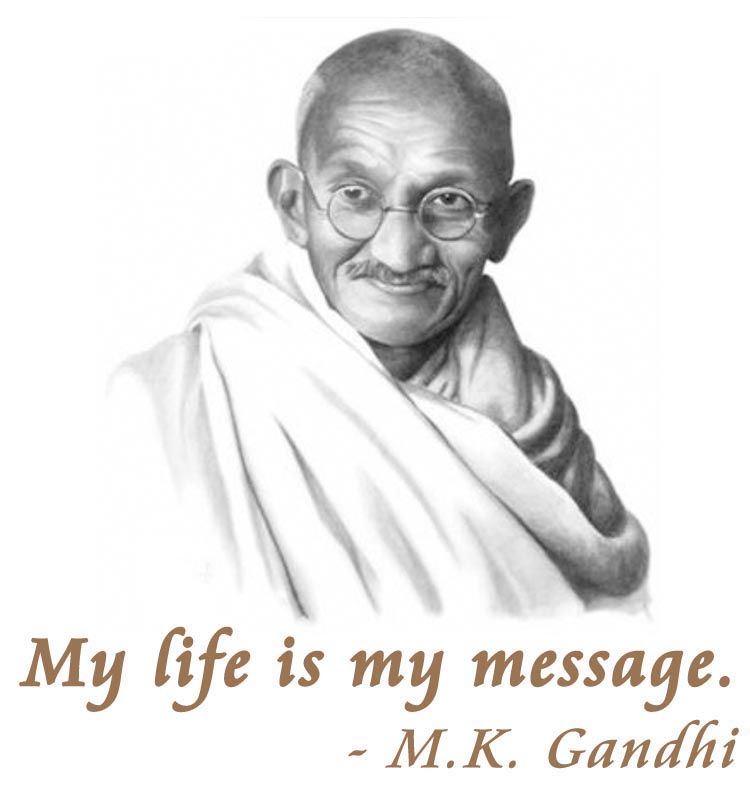
We are living in a sick and confused age. An age when people talk of peace but prepare for war; an age that preaches love but poisons people's minds with hatred; an age that talks about the inalienable rights of every created human being but upholds the might of the rich, the powerful and the privileged as the only right there is; an age that preaches harmony among men but sows the seeds of discord and rebellion; an age that talks about people's rights - the right to life, the right to work, the right to justice and so forth, but tramples upon those rights with impunity; an age that talks about freedom but keeps millions of innocent human beings in social, religious, economic and political bondage; an age when different races, different countries and different people are duly united by the wonders of science and technology into a global village but are unduly fragmented into citadels of mistrust, terrorism, ethnic conflicts, fratricidal strife and shameful genocides by man's greed and folly; an age that preaches God but worships mammon; an age that can boast of having everything that can make life easy, joyful and comfortable but lacks the peace that can sustain all that man claims he has. My love for the enigmatic Hindu Saint, Mahatma Gandhi, is boundless. This love grew out of the abundance of my admiration for a man who was able to do, and to do it to perfection, that which most men and women know to be the right thing and would have loved to do but have not been able to do and may never be able to do. Simply put, I love Mahatma Gandhi because, though a Hindu by religious profession, it is he who made Jesus Christ more real to me. Gandhi's supreme sacrifice for humanity, his boundless forbearance for the failings of humanity, his nonviolent approach to the inestimable violent acts of man's inhumanity to man, his inability to hate or even to be angry in the face of extreme provocation and his love for those who did everything possible to destroy him and his people convinced me more than anything else that an ordinary mortal, mere flesh and blood, can still echo those redeeming words of Christ - "Father forgive them for the do not what they are doing." Before I read deep into the life of this great man I entertained the vague notion that the excruciating agonies of Jesus Christ which culminated in his supreme sacrifice on the cross and the generous dispensation of his persecutors were all veiled in the mystery of divinity. Then, came the Gandhian poser: If Christ is divine, Gandhi is human. If this human Gandhi, who was a Hindu, could be inspired by the supreme sacrifice of the Cross to do what he did to make this world a better place, then, it is still possible for mere flesh and blood to live out the message of the Cross. Millions of people all over the world loved Gandhi long before ever our own generation came to be. Millions of people will continue to love him as long as the world lasts. And this love grows deeper and deeper with the passage of every day because Gandhi is so positively different. He is another of God's special message to humanity. In an age when religion, that which should bind us together and then link us to God, has turned out to be one of the most deadly time-bombs that threaten peace and the harmonious co-existence of people of different faiths, Gandhi demonstrated with his life that religious intolerance is an affront to God. In an age when the inordinate pursuit of wealth and undue attachment to material things make the rich and the powerful blind to the cry of the poor and the weak, Gandhi discarded everything he owned to be free to surrender himself for the good of the downtrodden. In an age when people measure their greatness by the enormous power they can wield, the number of people they can suppress, the estate they can command and the wealth they can display, Gandhi chose to take up the identity of the poorest and the lowliest people in order to raise them from the dungeon of oppression and despair and give them hope. When Winston Churchill, the proud and powerful British leader bragged that India would complacently remain under the afflictions of British oppression and exploitation, Mahatma Gandhi liberated India with the healing power of truth, love, redemptive suffering and nonviolent resistance. In an age that has replaced the message of the Cross with the threat of imminent nuclear annihilation, Gandhi chose to make his life a living Cross. Convinced that the life-style of many of the Christians of his time was a negation of the eternal teaching of Christ, he declared: "I love Christ but do not like your Christians." In Gandhi, therefore, God raised a Hindu to remind the world of the eternal message of the Cross. These and many more constitute my love for Gandhi. They constitute Fr. Jude Langeh's love for him. They constitute the love people all over the world have for him. Somewhere along the line, this infectious love for Gandhi brought Fr. Langeh and me together, making it possible for me to become a part of this book. As a student at the Claretian Institute of Philosophy, Nekede, Owerri, Imo State, Nigeria, Fr. Langeh came across some of my books, particularly the book on Gandhi. After reading it, he developed the type of interest I developed on the same Gandhi after reading about him many years ago. Besides, he wanted to know more about the author of the book. This marked the beginning of our friendship. When he made the decision to write his degree dissertation on Gandhi's doctrine of nonviolence, he visited and stayed many days in my parish to enable him complete his research work in my library. This book is the offshoot of that dissertation. Mahatma Gandhi is God's message to a world wounded by greed, reckless abuse of power and violence and by all the inequities mentioned at the beginning of this brief introduction. Those who have received the message and are interested in making the world, particularly Africa, a better place have an obligation to spread it. That is precisely what Fr. Langeh has done by writing this book. The book is a brief account of the life and message of the man behind what is undoubtedly the greatest and the most challenging moral epic of our time. By writing the book, Fr. Langeh is repeating in his own way what Martin Luther King, Junior declared after reading about Gandhi's life: "Christ furnished the spirit and motivation (of nonviolent resistance against evil) and Gandhi furnished the method.". The Relevance of Gandhi's Doctrine of Nonviolence deserves the attention of all who are interested in our common good as a people and the future of generations yet to be born. It is an invaluable treasure for gaining a better understanding of the indispensable role of peace in the arduous task of building a better society and strengthening our fraternal solidarity. Its message beckons all of us to commit our material and spiritual resources to the search for peace through nonviolent resistance. It is my privilege that Fr. Langeh has asked me to be a part of the book by introducing it to the public. I have done that with please. I sincerely thank him for giving me that honour and congratulate him for a job well done. Rev. Fr. John Odey |